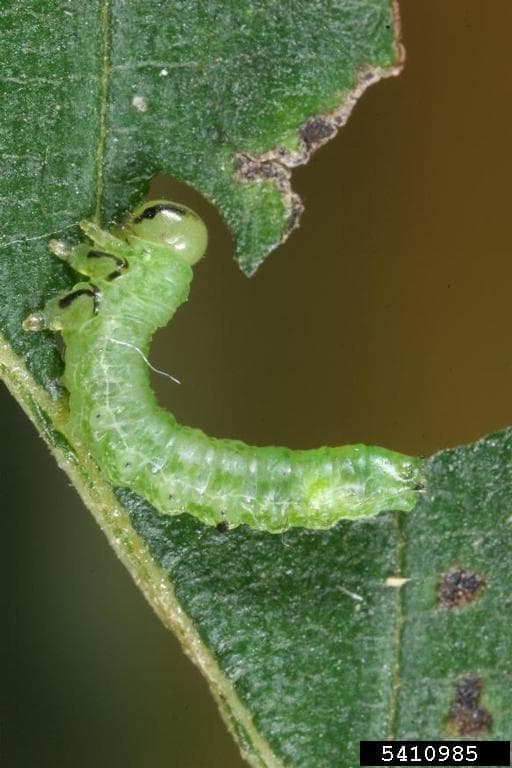
Elm Zigzag Sawfly (Aproceros leucopoda)
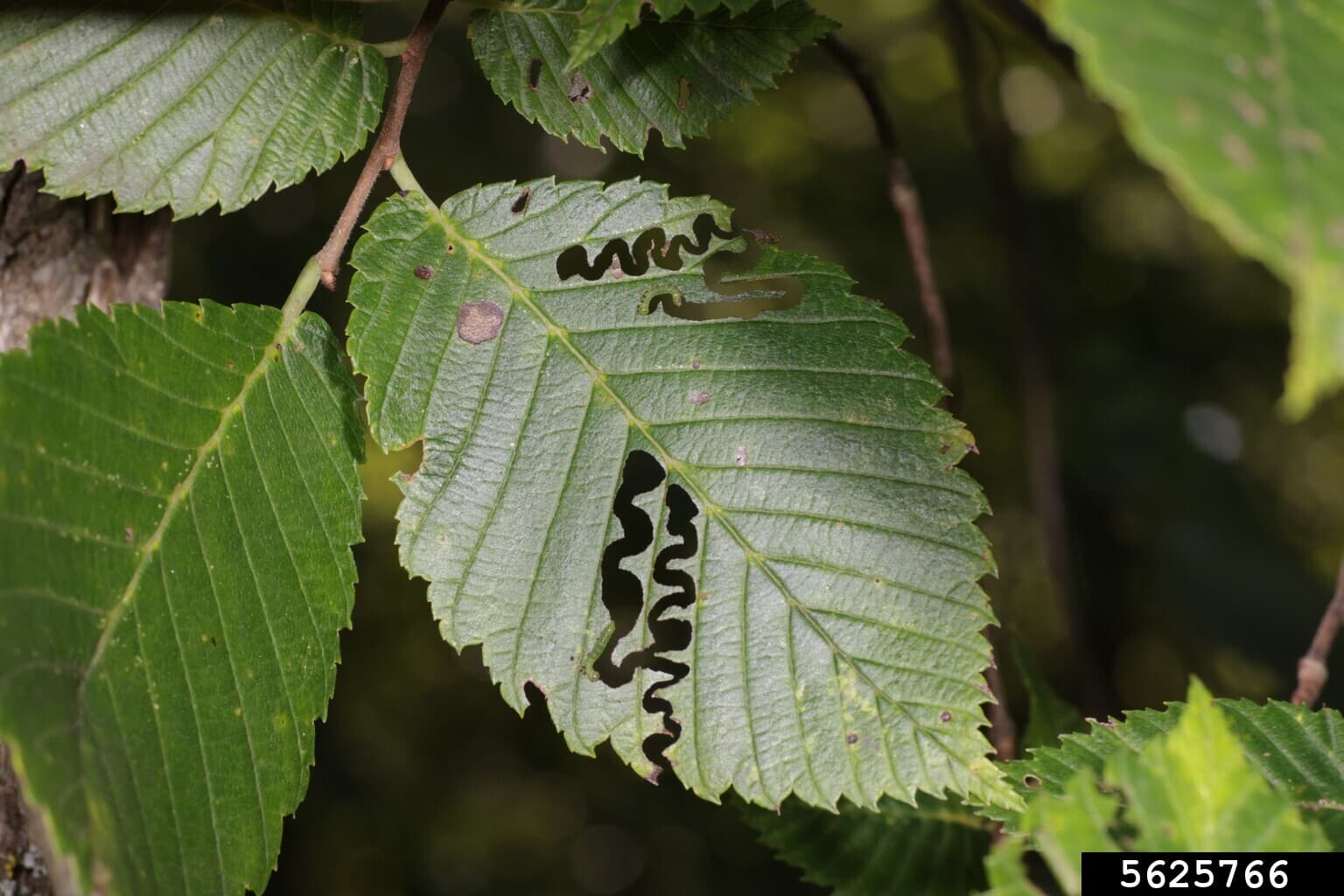
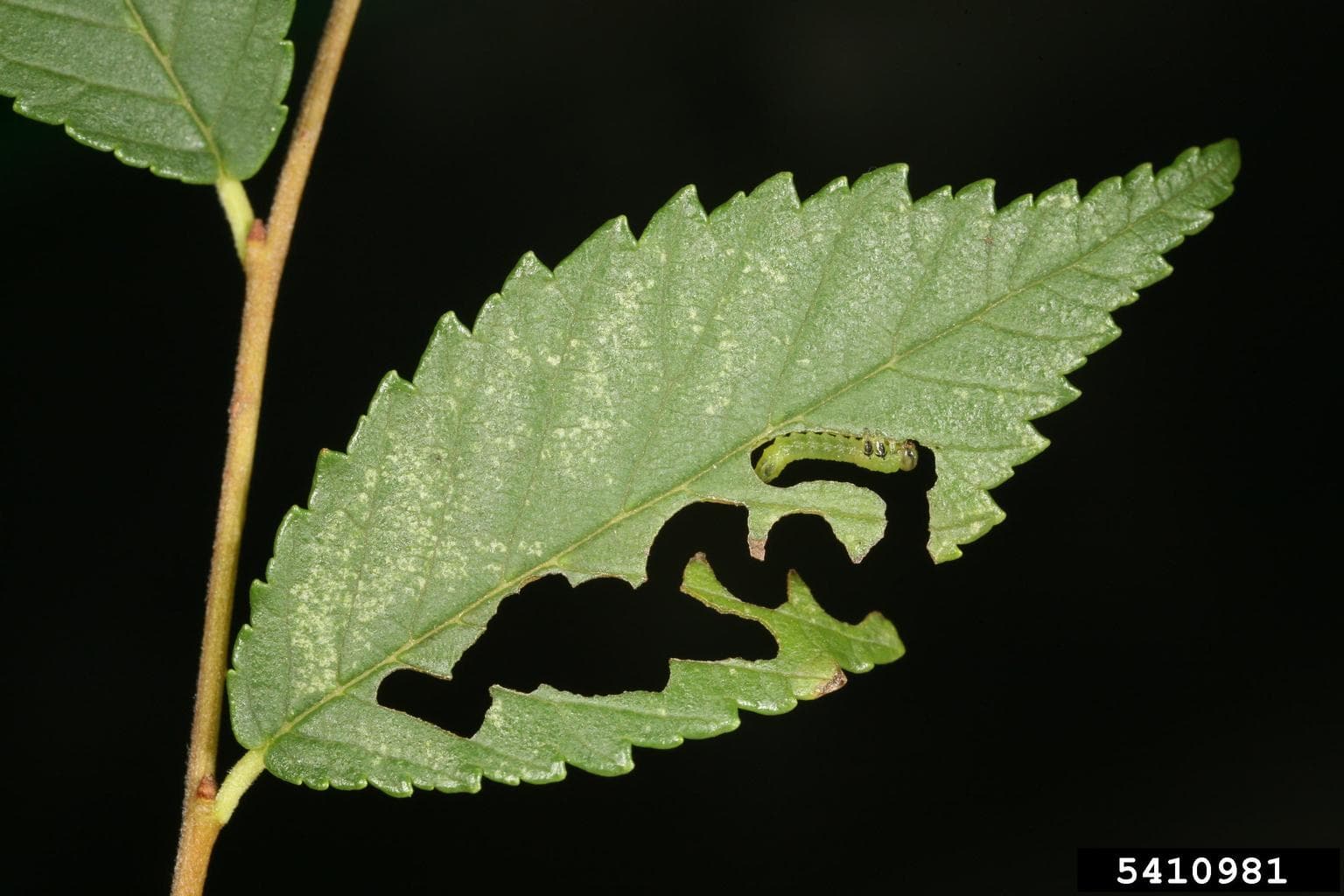
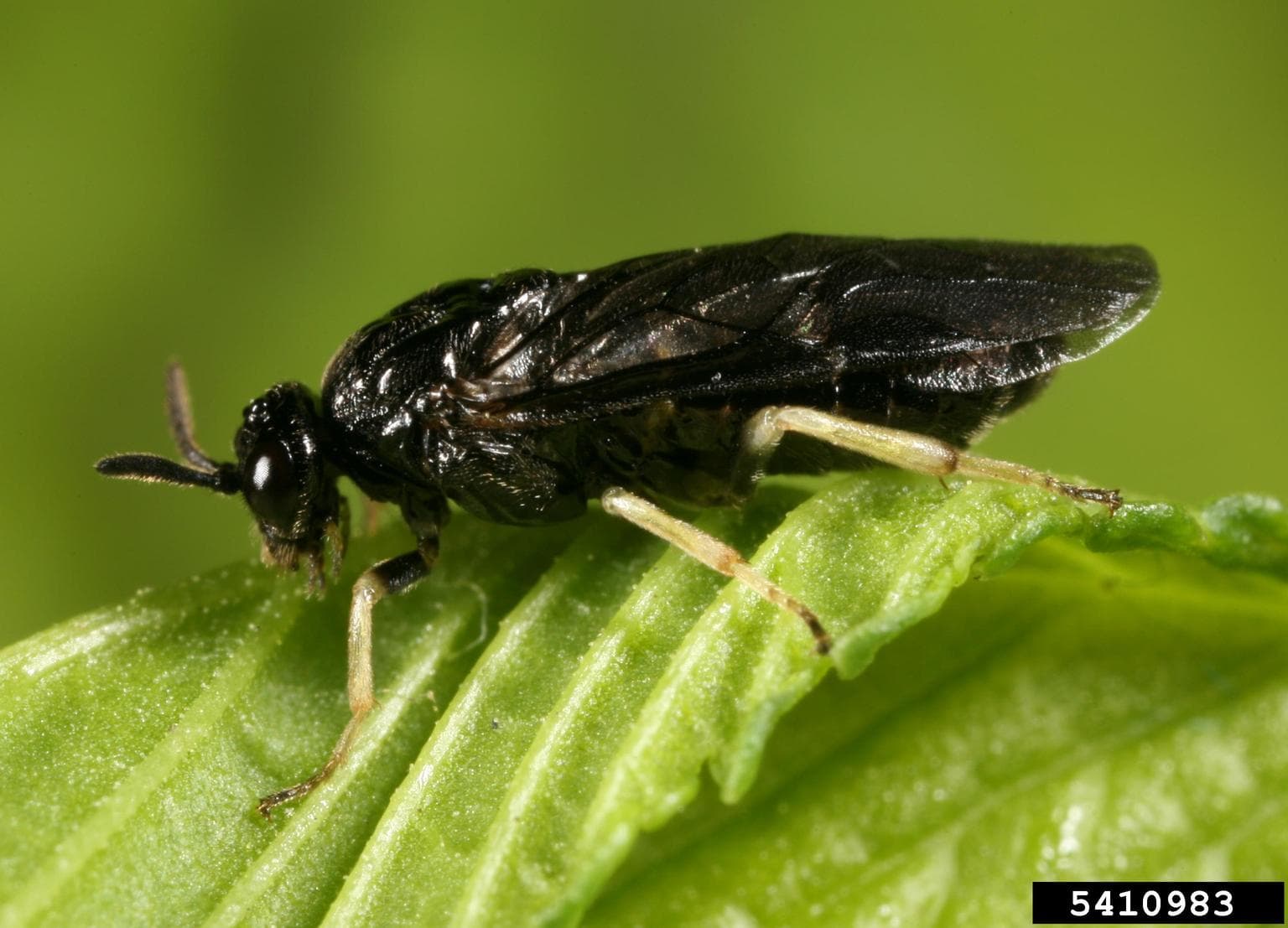
Elm zigzag sawfly (EZS) is an invasive insect that feeds on elm trees (Ulmus spp.). Larval feeding causes distinctive zigzag-shaped damage along leaf margins and can lead to significant defoliation. While healthy trees can often recover from a single defoliation event by producing new foliage, repeated defoliation can weaken trees, increase susceptibility to other stressors and, in severe cases, contribute to tree mortality. Unlike many wasp relatives, adult sawflies do not sting and pose no threat to people or animals.
Biology
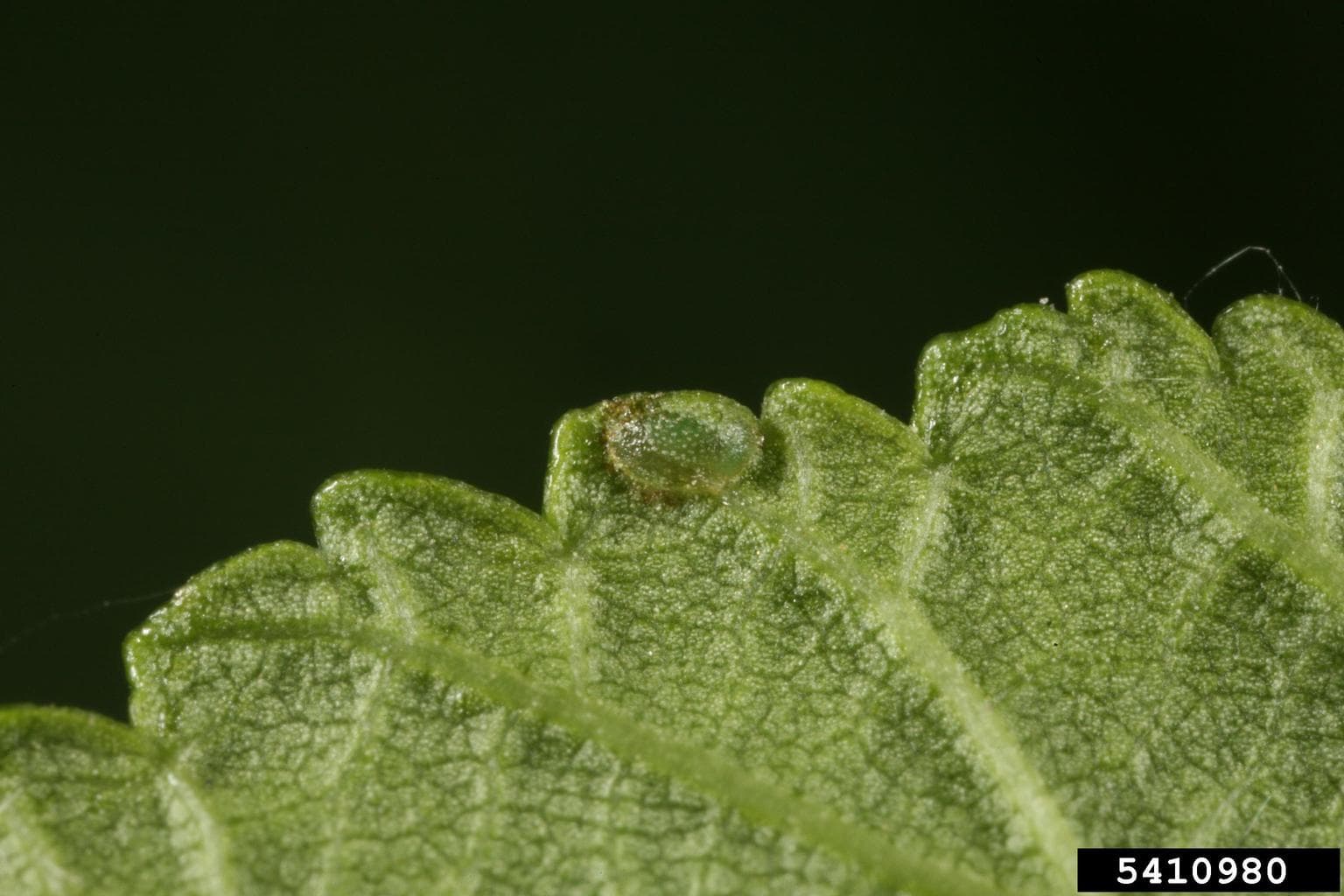
EZS overwinters in the pupal stage and emerges as an adult in spring. Reproduction occurs through parthenogenesis, meaning the known population consists entirely of females capable of producing viable eggs without mating. To date, no adult males have been documented. Females lay eggs in small notches along the edges of elm leaves. After hatching, larvae begin feeding on leaf tissue, creating the distinctive zigzag feeding pattern that gives the insect its common name. As larvae mature, they consume larger portions of leaves, leaving characteristic notches and holes.
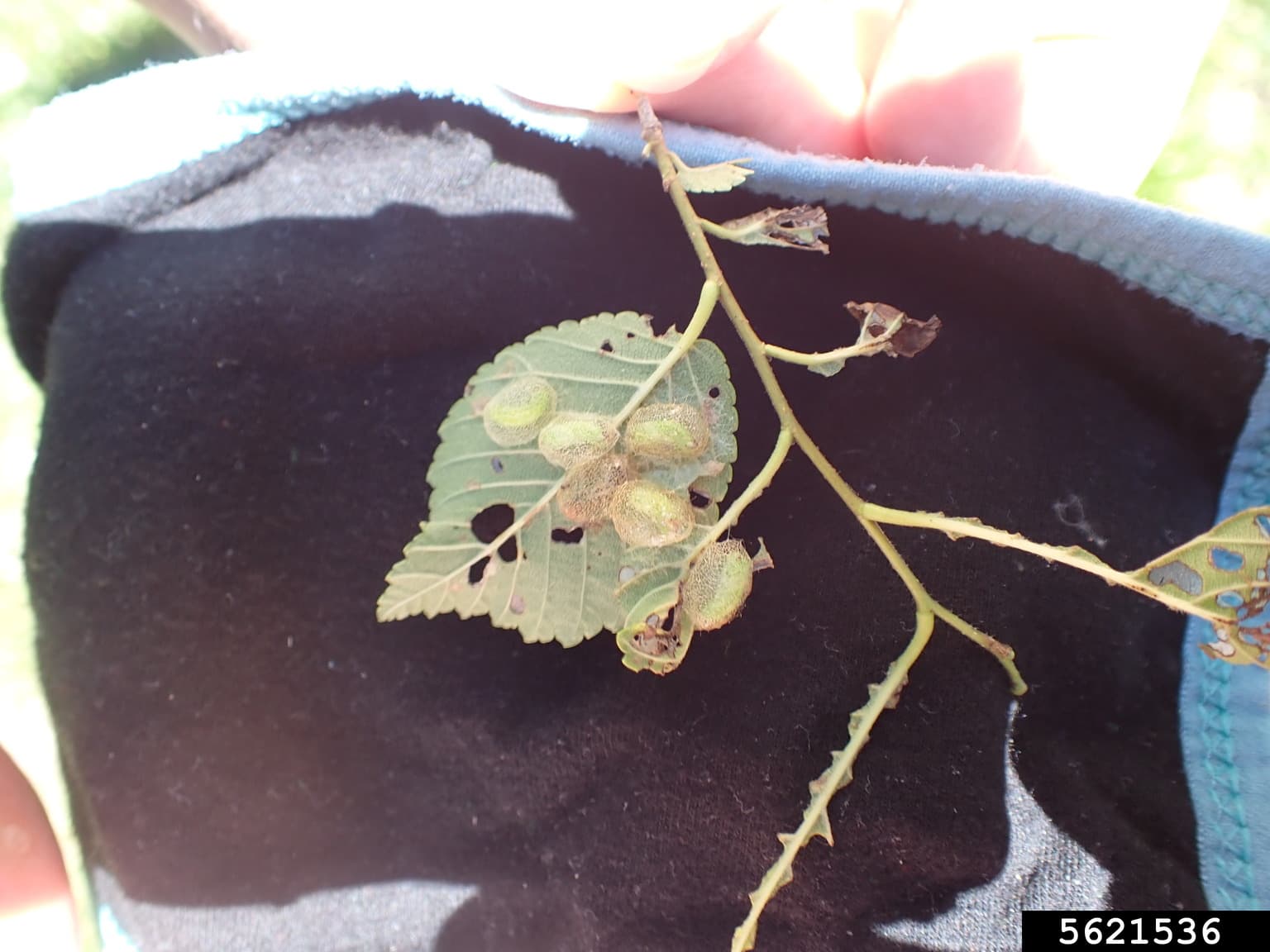
During summer, pupae develop within loosely woven cocoons attached to the undersides of leaves, twigs and shoots. Overwintering pupae are enclosed within denser cocoons that occur in leaf litter and organic debris on the forest floor. Multiple generations may occur each year, allowing populations to build rapidly.
Origin
EZS is native to eastern Asia, including China, Russia, Japan and the Korean Peninsula. It was first detected in North America in Canada in 2020 and was first identified in the United States in Virginia in 2021. Since then, it has been reported in several eastern and midwestern states. Due to EZS adults being capable fliers and rapid reproducers, the species has the potential to spread quickly.
How it spreads
EZS can spread quickly and populations can increase rapidly through parthenogenetic reproduction. Short distance dispersal is easy for the flying adults while long-distance spread may occur through the movement of infested plant material. The insect's ability to produce multiple generations annually further contributes to its expansion into new areas.
Where it's found
EZS was first detected in North America in Quebec, Canada, in 2020. It was subsequently reported in several U.S. states. The range of EZS in North America up to 2025 can be found here.
In 2026, the Michigan Department of Agriculture and Rural Development (MDARD) confirmed Michigan's first detection of elm zigzag sawfly in St. Clair County. The infestation was identified by the U.S. Department of Agriculture's Animal and Plant Health Inspection Service after an arborist submitted a report through the Midwest Invasive Species Information Network (MISIN).
What's being done (research, regulatory guidelines)
The long-term impact of elm zigzag sawfly in North America remains uncertain. However, experiences in Europe indicate the insect can cause widespread defoliation of both landscape and forest elm trees.
State and federal agencies are monitoring the insect's spread and encouraging public reporting of suspected infestations. In Michigan, residents can submit reports through the Midwest Invasive Species Information Network (MISIN), including photographs and location information to assist with identification and tracking efforts.
Small infestations may be managed by manually removing larvae or infested foliage. For larger infestations, insecticides labeled for use on trees and shrubs may provide control when applied early in the season while larvae are actively feeding.
The public can also help slow the spread of invasive species by:
Inspecting vehicles, outdoor equipment and recreational gear after travel.
Removing soil and plant debris from equipment and vehicles.
Avoiding the movement of firewood and other potentially infested materials.
Reporting suspected infestations through the Midwest Invasive Species Information Network online reporting tool or your local extension office.
Images of EZS